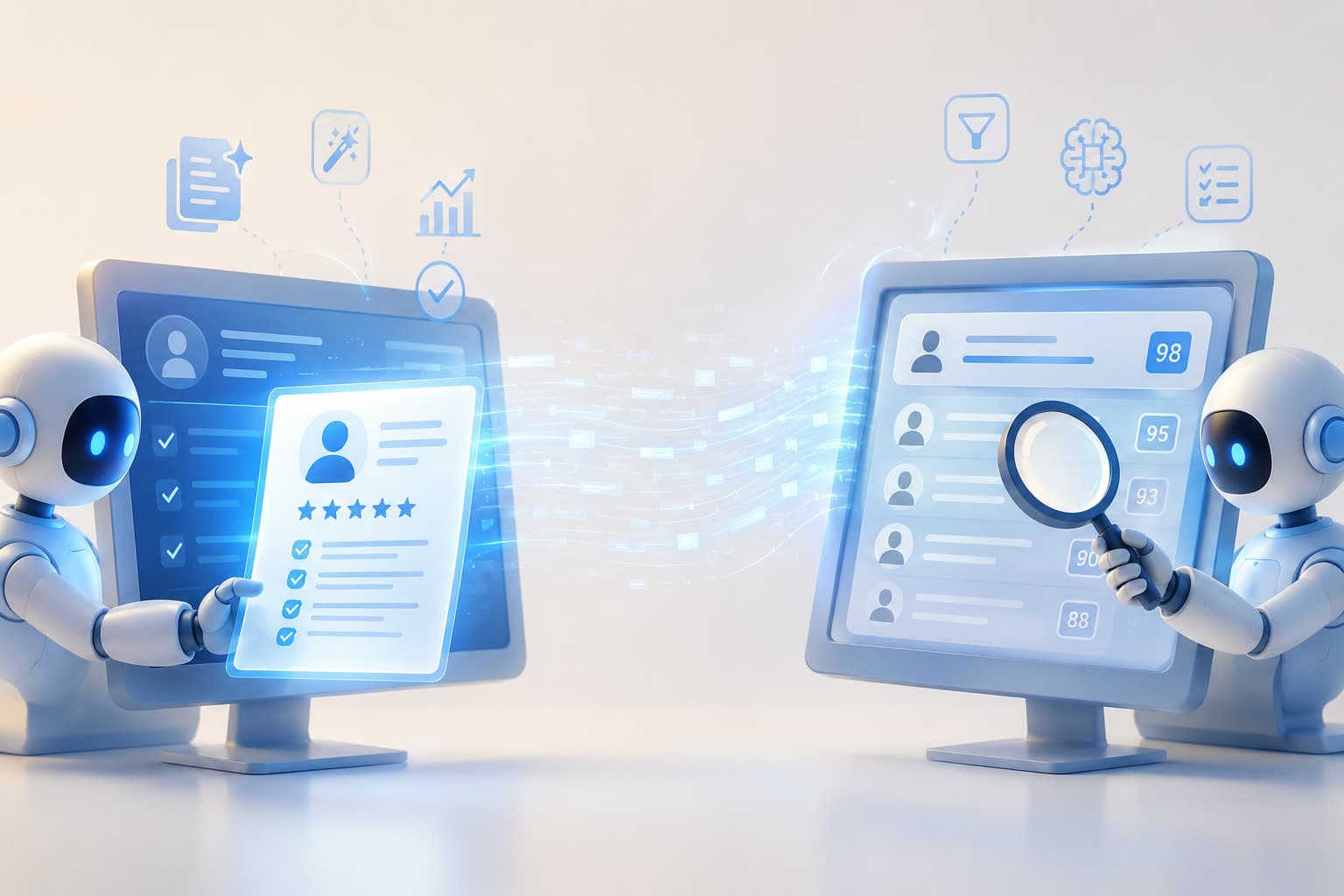
Your resume is being read by AI. It was probably written by AI too. So who's actually being evaluated?
Hiring today has become a strange theater:
Candidates pay $10 for a tool that generates a "perfectly quantified, keyword-optimized" resume. On the other side, an ATS scans it in one second and ranks it by keyword match.
A resume no human wrote, screened by a system no human reads.
Both humans have left the room. Two AIs are just exchanging passwords.
When Polish Stops Meaning Anything
Here's the core problem: resumes used to work because writing a good one was costly. You had to genuinely reflect on what you did and what you achieved. That cost WAS the signal.
AI drove that cost to zero. When every resume is polished, polish stops meaning anything. Signal becomes noise. And your AI screener isn't selecting the best talent — it's selecting the best prompt engineers.
What Hiring Teams Should Do
For hiring teams, the fix comes down to one shift: stop evaluating what candidates SAY. Start evaluating what they can't fake.
Weight evidence over adjectives. GitHub commits, portfolios, published work, verifiable projects. AI can write someone's resume. It can't write their three-year track record.
Interview for process, not outcomes. AI can help anyone claim "improved conversion by 30%." It can't fabricate the potholes they hit along the way. Three questions expose everything: Why option A over option B? What surprised you most? What would you do differently?
Stories can be generated. Details can't be rehearsed.
Use work samples. A two-hour real-world task, explained live, is more honest than ten pages of claims.
Be suspicious of perfection. When every bullet is precisely quantified and every keyword hits the job description, you may be looking at optimization, not experience. Real careers have rough edges. Flawless narratives come off an assembly line.
What Job Seekers Should Do
For job seekers, there's actually good news here:
When packaging costs nothing, authentic substance becomes priceless.
Spend ten hours building something for your portfolio, not ten hours polishing phrasing with AI.
Use AI to articulate your real experience — never to invent it. Interviewers are getting very good at probing for details. One crack, and you lose more than the offer.
Prepare depth, not scripts. For every line on your resume, know three layers: the context and constraints, your decisions and trade-offs, the results and reflections. No AI can prepare that for you — it belongs only to the person who lived it.
Back to Hiring's Essence
This AI-vs-AI arms race will eventually force hiring back to its essence:
A resume is just the knock on the door. What matters is who's standing behind it.
Packaging can fool an algorithm. It can't fool time.
What's your experience — have you caught an AI-polished resume in the wild? Or been filtered out by a bot yourself?
Takeaways
When every resume is polished, polish stops meaning anything.
No AI can prepare that for you — it belongs only to the person who lived it.
A resume is just the knock on the door. What matters is who's standing behind it.
Packaging can fool an algorithm. It can't fool time.
Was this useful?