Why Humans Still Matter in the Age of AI: A Lesson from Japan's EV Buses
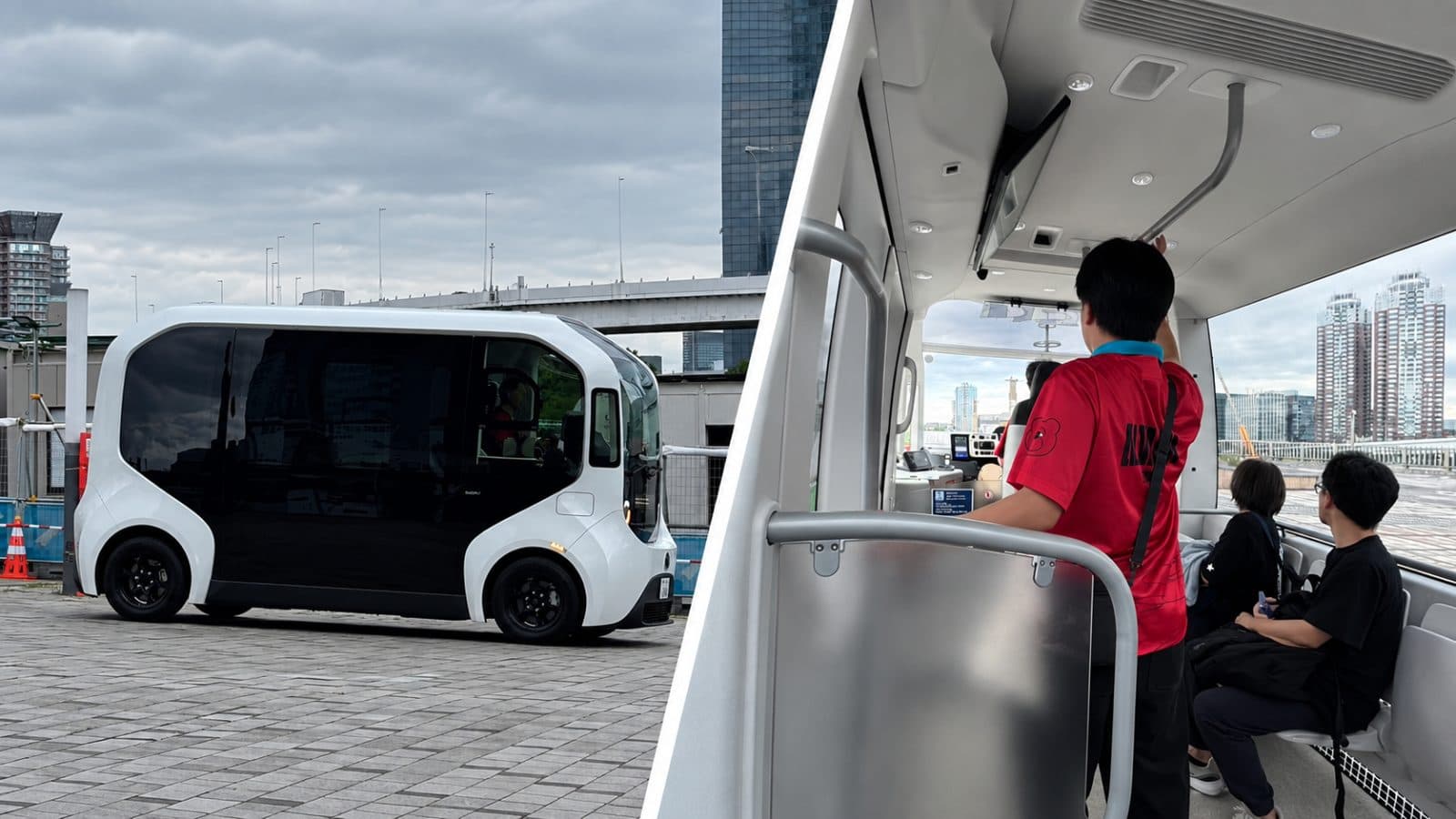
Today, I visited Tokyo Dream Park and happened to get on an EV bus. At first, I assumed it was fully autonomous, but then I noticed that there was still a driver on board. Given Japan's technological capabilities, I imagine the vehicle itself is capable of a high degree of automation. Yet a driver remains behind the wheel, and at every stop, there are also staff members helping maintain order, guide passengers, and answer visitors' questions.
Scenes like this are not unusual in Japan. Automated ticket machines, self-checkout counters, and highly automated transportation systems are already part of everyday life, yet people are often still present alongside the technology, ready to assist when needed.
It made me think about a simple question: if machines can already do the work, why do we still need people?
The Last Mile Problem
Machines are particularly good at handling standardized and predictable tasks.
For an automated bus, following a fixed route, stopping at designated stations, and opening and closing the doors are relatively straightforward tasks to automate. The real difficulty begins when something happens that cannot be fully anticipated or defined in advance.
What happens when an elderly passenger needs more time to board? What if a tourist does not know where to get off? What if there is unexpected road construction, a passenger suddenly feels unwell, or the system itself encounters an abnormal situation?
The real question, therefore, is not simply: can the machine drive the bus? It is: can the machine handle everything that might happen around the bus?
This is why many automated systems still need what we might call a human fallback layer.
Getting a system to 90% automation may be relatively achievable. Moving from 90% toward something close to 100%, however, can become disproportionately expensive and difficult, because what remains tends to consist of rare but complicated situations involving ambiguity, exceptions, and potentially serious consequences.
In many cases, rather than spending enormous resources trying to make machines anticipate every possible exception, it may make more sense to design a system in which machines handle standardized situations while humans step in when reality deviates from the standard process.
Humans Beyond Doing the Work
There is another reason people remain part of highly automated systems.
Humans can make judgments in unexpected situations, communicate with passengers, take responsibility when something goes wrong, and provide something that is difficult to quantify but nevertheless important: a sense of trust and reassurance.
This suggests that the driver may not simply disappear from the system. Instead, the nature of the role may gradually change. Someone who was once primarily a **driver** may increasingly become a **safety operator, exception handler, and passenger support person**.
The job remains, but the tasks inside the job are being reorganized.
Rethinking AI and Job Replacement
We often ask: which jobs will AI replace? Perhaps a more useful question is: Which tasks will AI replace, and what will humans do next?
AI is likely to take over many tasks that are repetitive, rule-based, and predictable. As that happens, a greater share of human work may shift toward dealing with ambiguity and exceptions, exercising judgment, coordinating with others, building trust, and taking responsibility for decisions and outcomes.
Of course, this does not mean that AI will not reduce the number of jobs. Some roles may disappear, and some teams may become smaller. But the work performed by the people who remain may also change in an important way: the volume of work may decrease, while the density of decisions increases.
If that is the case, one of the most important capabilities in the future may no longer be the ability to complete standardized tasks faster than a machine. Instead, the more important question may be: when the standard process stops working, can I figure out what should happen next? That was my small takeaway from riding an EV bus in Japan today.
Machine Layer and Human Exception Layer
What I find interesting about automation in Japan is that it does not always seem to be designed simply to remove people from the system. In many situations, it looks more like a combination of a machine layer and a human exception layer.
Technology provides efficiency and consistency, while people remain responsible for navigating the uncertainty that the system cannot fully anticipate.
Perhaps this is also one of the directions in which work will evolve in the age of AI.
Takeaways
Humans can make judgments in unexpected situations, communicate with passengers, take responsibility when something goes wrong, and provide something that is difficult to quantify but nevertheless important: a sense of trust and reassurance.
The job remains, but the tasks inside the job are being reorganized.
We often ask: which jobs will AI replace? Perhaps a more useful question is: Which tasks will AI replace, and what will humans do next?
The volume of work may decrease, while the density of decisions increases.
What I find interesting about automation in Japan is that it does not always seem to be designed simply to remove people from the system.
Was this useful?