# Where Will Value Re-Concentrate as General-Purpose AI Models Become Infrastructure?
Today, as more and more companies gain access to powerful AI models, open-source models rapidly close the gap with proprietary ones, and inference costs continue to fall, model capability is gradually shifting from a scarce product into infrastructure. Much like electricity, cloud computing, and the mobile internet, AI models are becoming a foundational capability underlying an expanding range of products and organizations.
As the barrier to "accessing intelligence" continues to fall, what will become scarce instead? When every company can plug into powerful models, who will actually capture the value in the next stage?
Models Are Shifting from Products to a Foundational Capability Layer
Looking back at the evolution of the internet, we can see a similar pattern. In the early days, simply having a website was scarce and valuable. Once website-building tools became widely available, scarcity shifted elsewhere—to traffic distribution, payment systems, logistics networks, supply chains, and customer relationships.
Cloud computing followed a similar path. Basic computing resources were once expensive and scarce. As they became increasingly standardized, value migrated toward developer ecosystems, data platforms, and industry-specific applications.
AI is now undergoing a similar transition.
In the past, having access to a sufficiently powerful foundation model could almost determine whether a company had the right to compete at all. Today, while frontier model capabilities remain concentrated among a relatively small number of players, most companies can already access powerful models through APIs, cloud services, open-weight models, and private deployments.
As a result, a typical AI product is becoming increasingly easy to replicate:
- Connect to a model.
- Add a chat interface.
- Build a set of prompts.
- Generate content, answer questions, or summarize documents.
- Package it as an "AI assistant" for a particular industry.
Products like these can emerge quickly—but they can also lose differentiation just as quickly. Once the underlying model improves, or a competitor switches to a cheaper model, users may have little reason to stay.
The real question is therefore no longer, "Are you using AI?"
It is:
**Do you possess scarce resources beyond the model itself—resources that the model cannot easily replace?**
That is where the next redistribution of AI value begins.
Scarcity #1: Proprietary Data and Feedback Loops
When people talk about AI moats, "data" is often the first answer that comes to mind.
But more precisely, what will become scarce is not static data. It is **operational data that continuously generates feedback**.
Public internet data is already being exploited at massive scale and is becoming increasingly commoditized. Any company can read industry reports, search public websites, and access general-purpose knowledge bases.
What is much harder to obtain is data generated inside real business operations:
- Was a contract ultimately revised, signed, or rejected?
- Did a sales lead eventually convert?
- Did a customer service interaction actually solve the problem—or trigger a complaint?
- Was a diagnostic recommendation accepted by a physician?
- Did a robot successfully complete a grasping, transportation, or assembly task?
- Did an operational decision ultimately reduce costs, increase revenue, or create additional risk?
These forms of data share three characteristics: they are usually private, they are embedded in specific workflows, and they contain clear outcome labels.
That means the most valuable AI companies of the future may not simply be those with "more data." They will be those that own a continuously operating feedback loop:
**Business scenario → Data generation → Model or Agent execution → Outcome feedback → System improvement**
Whoever participates in this loop has the opportunity to keep improving. A later entrant may use exactly the same underlying model but still lack years of operational history, customer feedback, and real-world correction data.
This is also why some seemingly traditional software companies, industry service providers, and platforms may ultimately occupy extremely strong positions in AI: they are already embedded in customers' everyday behavior and business data.
Consider legal AI. The value of a legal AI system is not merely that it can "read contracts." The deeper advantage comes from knowing which clauses customers have historically rejected, which risks eventually led to disputes, how different legal teams revised particular language, and which combinations of clauses were acceptable to business teams.
A model can understand language. But accumulated business feedback teaches a system **what a good outcome actually looks like**.
Scarcity #2: Access to Workflows
Models can answer questions. But companies do not ultimately need answers—they need work to get done.
The difference is substantial.
A general-purpose model might tell you:
But an AI system embedded in the workflow needs to do much more:
- Read the contract, customer history, and internal policies.
- Identify high-risk clauses.
- Retrieve similar historical cases.
- Recommend revisions.
- Generate an editable version.
- Initiate legal or business approval.
- Write the final outcome back into the CRM, contract management system, or audit trail.
- Escalate exceptions to the right person.
The first is a capability. The second is a workflow.
The next competitive frontier, therefore, will not simply be about whose AI is "better at talking." It will be about who can embed AI into CRM, ERP, ticketing systems, code repositories, supply-chain systems, financial systems, and approval processes—and enable it to take action under clearly defined permissions.
This is where AI Agents are both particularly important and frequently misunderstood.
The real value of an Agent is not that it allows "AI to think autonomously like a human." Its value lies in enabling AI to reliably execute multi-step tasks within bounded environments: reading information, calling tools, taking actions, undergoing review, handling exceptions, and leaving behind auditable records.
McKinsey's 2025 global survey found that 62% of surveyed organizations had begun experimenting with AI Agents, while 23% were already scaling Agent systems in at least one business function. Yet within any individual business function, the share of organizations scaling Agents remained below 10%.
This gap tells us something important: enterprise interest in Agents is already high, but large-scale deployment remains difficult.
The bottleneck is not entirely model capability. It is the workflow itself:
- Are task boundaries clearly defined?
- Can the necessary systems be connected?
- Can permissions be controlled?
- Can errors be detected?
- Can humans intervene?
- Can outcomes be measured?
- Who is accountable when something goes wrong?
This is why the first successful Agents may not be "universal Agents," but rather systems focused on high-frequency, narrow, process-intensive, and verifiable tasks.
Examples include code testing and troubleshooting, customer-service ticket handling, preliminary insurance claims review, invoice and expense auditing, sales-lead follow-up, supply-chain exception management, and compliance documentation.
These use cases share several characteristics: tasks recur frequently, rules are relatively clear, economic value can be calculated, and outcomes can be fed back into the system.
Scarcity #3: Distribution, Trust, and Customer Relationships
There is a common misconception in technology: that the product with the strongest technical capability will inevitably win.
Real-world business rarely works that way.
Users do not automatically migrate their workflows simply because one model scores a few points higher on a benchmark. Enterprises are even less likely to do so.
They are not buying a "smarter model." They are buying a system that can be deployed, understood, managed, and trusted.
This means distribution will become important again.
Here, distribution means more than traffic or downloads. It means the ability to enter and operate within a customer organization:
- Do you already have established customer relationships?
- Do you control industry distribution channels?
- Are you embedded in the customer's existing software environment?
- Can you provide implementation, training, and after-sales support?
- Have you earned trust from security, compliance, and procurement teams?
- Can you translate AI into visible improvements in revenue, cost, or risk?
In other words, platforms that own user entry points, service providers with strong industry networks, and software companies with deep system-integration capabilities may ultimately have greater advantages than companies that simply wrap existing models.
For AI founders, this raises an unglamorous but extremely practical question:
**If your competitors can access your underlying model tomorrow at a lower price, why should customers still choose you?**
The answer cannot simply be, "Our prompts are better," or "Our interface looks nicer."
A stronger answer might be:
- We are already embedded in the customer's daily operations.
- We are deeply integrated with their data, permissions, and approval processes.
- We deliver measurable business outcomes.
- Their teams have developed new operating habits around our product.
- Our services and ecosystem make switching costly and inconvenient.
Models can be replaced.
Customer relationships, organizational trust, and operating habits are much harder to replicate.
Scarcity #4: Evaluation, Governance, and Accountability
Enterprises do not lack AI demos. What they lack are the conditions required to confidently place AI inside core business operations.
The fact that a model can generate plausible-looking text does not mean it should be allowed to process loan approvals, medical documentation, financial reports, supply-chain scheduling, customer refunds, or production-system controls.
Once AI moves from "providing recommendations" to "taking actions," difficult questions immediately emerge:
- Why did it make this decision?
- Is the information it relied on trustworthy?
- Did it access sensitive data beyond its authorization?
- Was it manipulated by incorrect instructions or malicious prompts?
- If it makes a mistake, how can the action be rolled back?
- Who can approve high-risk actions?
- Who ultimately bears responsibility?
As models become more capable and Agents gain greater ability to act, evaluation, observability, permission management, security, and governance become increasingly important.
The enterprise AI stack may therefore give rise to an entire category of highly valuable products that are largely invisible to ordinary users:
- AI quality evaluation and red-team testing.
- Model-output monitoring, logging, and traceability systems.
- Agent identity and permission management.
- Sensitive-data detection, masking, and access control.
- Protection against prompt injection and data leakage.
- Human-in-the-loop systems, manual approval, and exception escalation.
- AI governance tools for regulators, auditors, and internal risk teams.
These capabilities may not look like blockbuster consumer applications. But they will determine whether AI can evolve from a personal productivity tool into an organization-level production system.
McKinsey's research also illustrates this gap. Many organizations report cost reductions or revenue improvements in individual AI use cases, yet only 39% of respondents said AI had contributed to EBIT at the enterprise level. Organizations capturing greater value tend not merely to deploy AI tools—they redesign workflows around them.
This suggests that some of the most valuable companies in the next phase of AI may not be those training yet another model. They may instead help enterprises answer a more practical question:
**How do I know whether AI is doing the right thing? And when it gets something wrong, how do I contain the damage while continuing to trust the system?**
Scarcity #5: The Ability to Deliver in the Physical World
If competition in digital AI is about **how intelligence enters workflows**, embodied intelligence is about **how intelligence enters the physical world**.
Robotics, humanoid robots, autonomous driving, industrial vision, intelligent warehousing, and autonomous equipment matter not simply because they appear futuristic, but because they attempt to transform digital intelligence into physical productivity.
Once AI enters the physical world, however, the constraints become fundamentally different:
- Environments are not always standardized.
- Data is scarce and difficult to collect.
- Hardware wears out, fails, and requires maintenance.
- The consequences of safety failures are much greater.
- Every deployment environment contains complex processes and exceptions.
- Deployment efficiency and unit economics determine whether commercialization is viable.
For this reason, the most promising near-term opportunities in embodied AI may not come from general-purpose humanoid robots that can "do everything," but from systems that can reliably perform critical tasks within specific environments.
Examples include:
- Picking, transportation, sorting, and inventory counting in warehouses.
- Loading, unloading, inspection, and assembly in manufacturing.
- Harvesting, grading, inspection, and weeding in agriculture.
- Inspection in hazardous environments such as energy facilities, construction sites, and mines.
- Assistive tasks in healthcare, eldercare, hospitality, and retail.
The competitive advantage of these systems extends far beyond models. It includes real-world operational data, sensors, end effectors, environment adaptation, field-maintenance systems, and customer deployment experience.
Software can be launched overnight. A robotic system may need to operate continuously on-site for months or even years before it proves that it can genuinely replace part of human labor, reduce accidents, or increase productivity.
The real moat in embodied AI, therefore, is not the demo video.
It is this:
**Can the system reliably complete the task every day—and can the customer make the economics work?**
Value Will Not Disappear. It Will Re-Concentrate Elsewhere.
As model capabilities become increasingly accessible, value will not be distributed evenly across all AI applications.
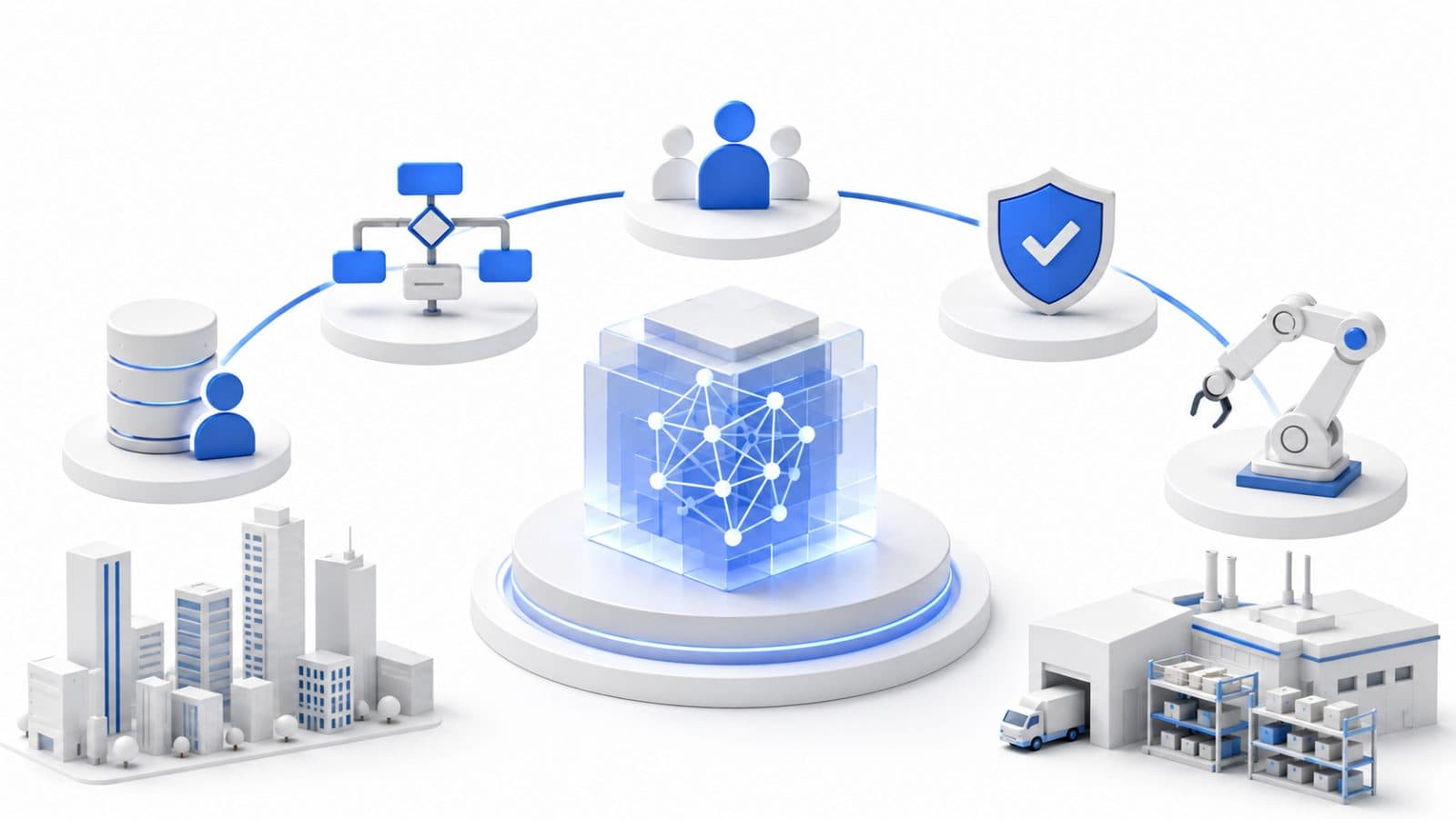
Instead, it is likely to concentrate around five scarce capabilities:
- **Data embedded in real business feedback loops.**
- **Access to critical enterprise and industry workflows.**
- **Customer distribution, implementation capabilities, and trust.**
- **The ability to evaluate, govern, and take responsibility for AI actions.**
- **The ability to convert digital intelligence into real-world physical outcomes.**
This also changes how we should think about "AI opportunities."
Not every AI company of the future needs to become a new model company.
Some of the largest opportunities may exist in areas that appear less glamorous but are genuinely difficult to replace: data cleaning, industry integration, permission management, workflow redesign, customer delivery, field operations, and outcome verification.
Models determine **what AI can do**.
But who owns the data, access points, accountability, and delivery capabilities will determine **where the value ultimately flows**.
The first stage of AI was about **who could build more powerful intelligence**.
The second stage was about **who could turn intelligence into accessible infrastructure**.
The next stage will be about something else:
**Whoever controls the scarce layers above the model will be best positioned to capture durable value.**
For companies, the question should therefore no longer be simply, "How do we adopt AI?"
Instead, they should ask:
- What data do we possess that others cannot easily obtain?
- Are we embedded in our customers' most critical workflows?
- Can we convert AI outputs into measurable business outcomes?
- When AI fails, can we control the risk, explain what happened, and take responsibility?
- If model costs continue to fall, what irreplaceable value do we still possess?
For individuals, the question should no longer be simply, "Do I know how to use AI?"
The more important question is whether you can understand the real problems of an industry, redesign workflows, define what a good outcome looks like, orchestrate human–AI collaboration, and exercise judgment and accountability when situations become complex or exceptional.
The World Economic Forum estimates that by 2030, approximately 39% of workers' existing skill sets will be transformed or become outdated. AI and big data, technological literacy, creative thinking, as well as resilience, flexibility, and collaboration are all expected to become increasingly important.
When general-purpose models become infrastructure, the truly scarce resource will no longer be **intelligence itself**. It will be the ability to **embed intelligence into reality, organize reality around it, and ultimately use it to change reality.**
Takeaways
In the past, having access to a sufficiently powerful foundation model could almost determine whether a company had the right to compete at all. Today, while frontier model capabilities remain concentrated among a relatively small number of players, most companies can already access powerful models through APIs, cloud services, open-weight models, and private deployments.
Do you possess scarce resources beyond the model itself—resources that the model cannot easily replace?
Some of the largest opportunities may exist in areas that appear less glamorous but are genuinely difficult to replace: data cleaning, industry integration, permission management, workflow redesign, customer delivery, field operations, and outcome verification.
When general-purpose models become infrastructure, the truly scarce resource will no longer be intelligence itself. It will be the ability to embed intelligence into reality, organize reality around it, and ultimately use it to change reality.
Was this useful?