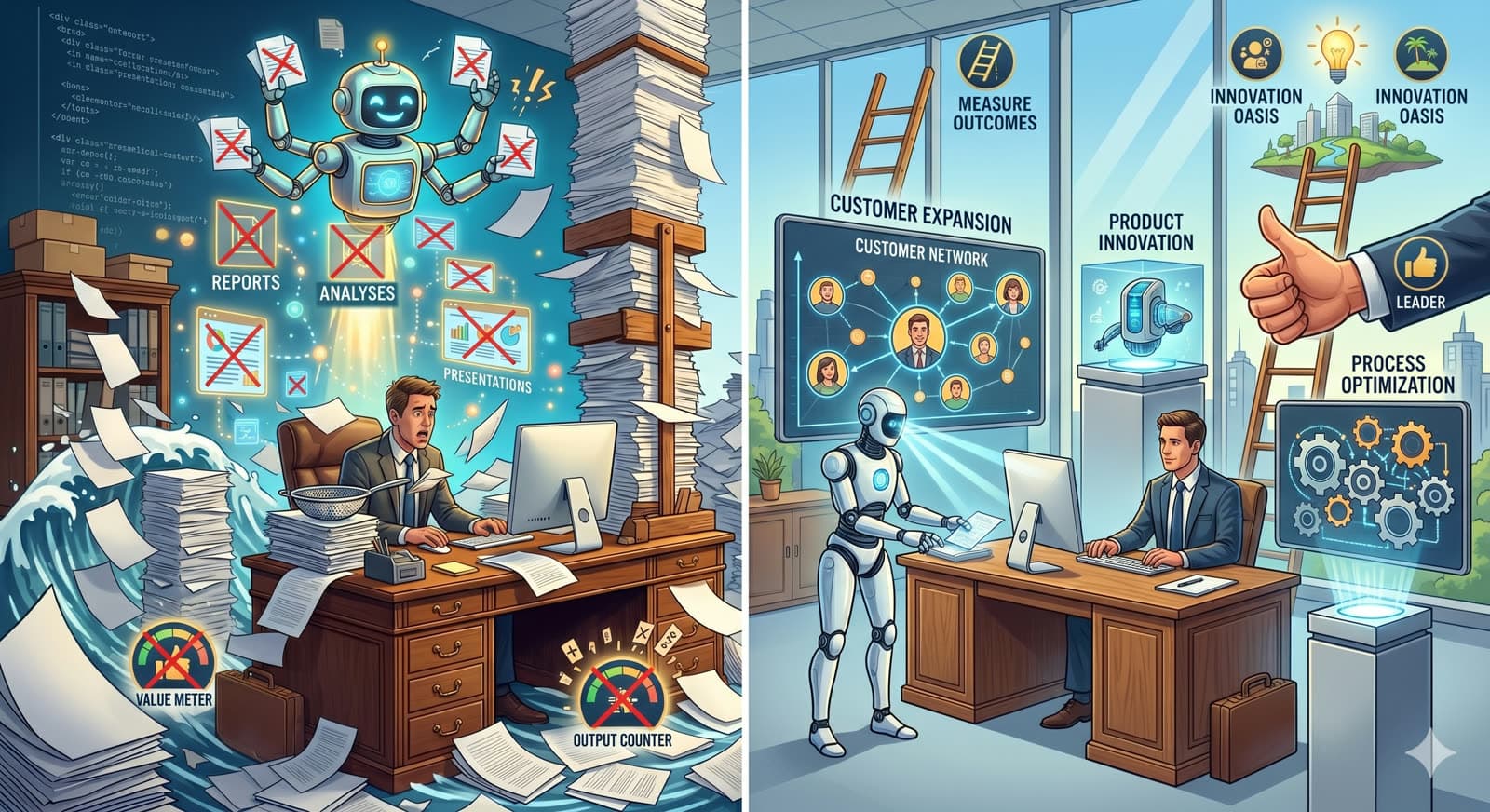
AI was supposed to make organizations dramatically more productive. In many ways, it has. A report that once took hours can now be generated in minutes. A presentation that used to consume half a day can be drafted almost instantly. Teams that previously produced one analysis now have the capacity to produce five.
At first glance, this looks like a massive productivity breakthrough. But many organizations are overlooking an uncomfortable reality: producing more information is not the same as creating more value.
Instead of eliminating waste, AI is often relocating it.
Employees spend less time writing reports, yet far more time reading them. They generate more analyses, more meeting summaries, more slide decks, more dashboards, and more documentation than ever before. The bottleneck has quietly shifted from producing information to consuming it. As a result, many teams feel busier despite having much better tools.
The Jevons Paradox of AI
This phenomenon is hardly new. In 1865, economist William Stanley Jevons observed that improvements in steam engine efficiency did not reduce Britain's coal consumption. They increased it. As coal became cheaper to use, people simply found more ways to use it. Demand grew faster than efficiency.
The same economic logic is beginning to shape AI adoption inside organizations.
As content becomes cheaper to generate, organizations naturally ask for more of it. Reports become longer, analyses become more frequent, meetings generate even more documentation, and information accumulates faster than anyone can meaningfully process. AI has reduced the cost of creation, but it has also encouraged an explosion in demand.
This explains why many companies adopt AI without feeling significantly more productive. The technology is not failing. The organization is. Instead of questioning whether a piece of work is necessary, leaders often celebrate that it can now be produced more quickly. Efficiency becomes an excuse to expand workload rather than eliminate it.
Asking the Right Question
The question for leaders, therefore, is no longer, "How can AI help us produce more?" The more important question is, "How do we prevent AI from creating a new form of organizational waste?"
Three Ways to Prevent AI Waste
The first step is to reduce unnecessary demand rather than simply reducing effort. Whenever work becomes cheaper, organizations instinctively ask for more of it. That instinct needs to be challenged. Reports, recurring meetings, approval processes, status updates, and documentation should be reviewed regularly. If a task only exists because AI made it inexpensive to create, it probably shouldn't exist at all.
Second, organizations need to measure value instead of volume. If performance is evaluated by the number of reports written, presentations delivered, or documents produced, employees will naturally use AI to maximize output. But organizations do not succeed because they create more content. They succeed because they solve customer problems faster, make better decisions, innovate more effectively, and generate better business outcomes. Those are the metrics AI should improve.
Finally, leaders must intentionally decide where AI-generated time savings should go. Time never remains empty for long. If organizations do not deliberately redirect newly available capacity, it will quickly be consumed by additional meetings, extra reports, and new administrative requests. The real opportunity is to reinvest that time into activities AI cannot replace easily: deeper customer understanding, strategic thinking, experimentation, learning, and innovation.
Courage Over Volume
The organizations that gain the greatest advantage from AI will not necessarily be those producing the largest volume of content. They will be those courageous enough to eliminate the greatest amount of unnecessary work.
AI is incredibly good at making production cheaper. But unless leaders redesign how work itself is created, evaluated, and consumed, AI will simply accelerate the production of things that nobody truly needs.
That is how AI waste begins.
And preventing it may become one of the defining leadership challenges of the AI era.
Takeaways
producing more information is not the same as creating more value.
Efficiency becomes an excuse to expand workload rather than eliminate it.
The organizations that gain the greatest advantage from AI will not necessarily be those producing the largest volume of content. They will be those courageous enough to eliminate the greatest amount of unnecessary work.
Was this useful?