How to Build a Super Organization with Super Individuals
The Burnout Trap
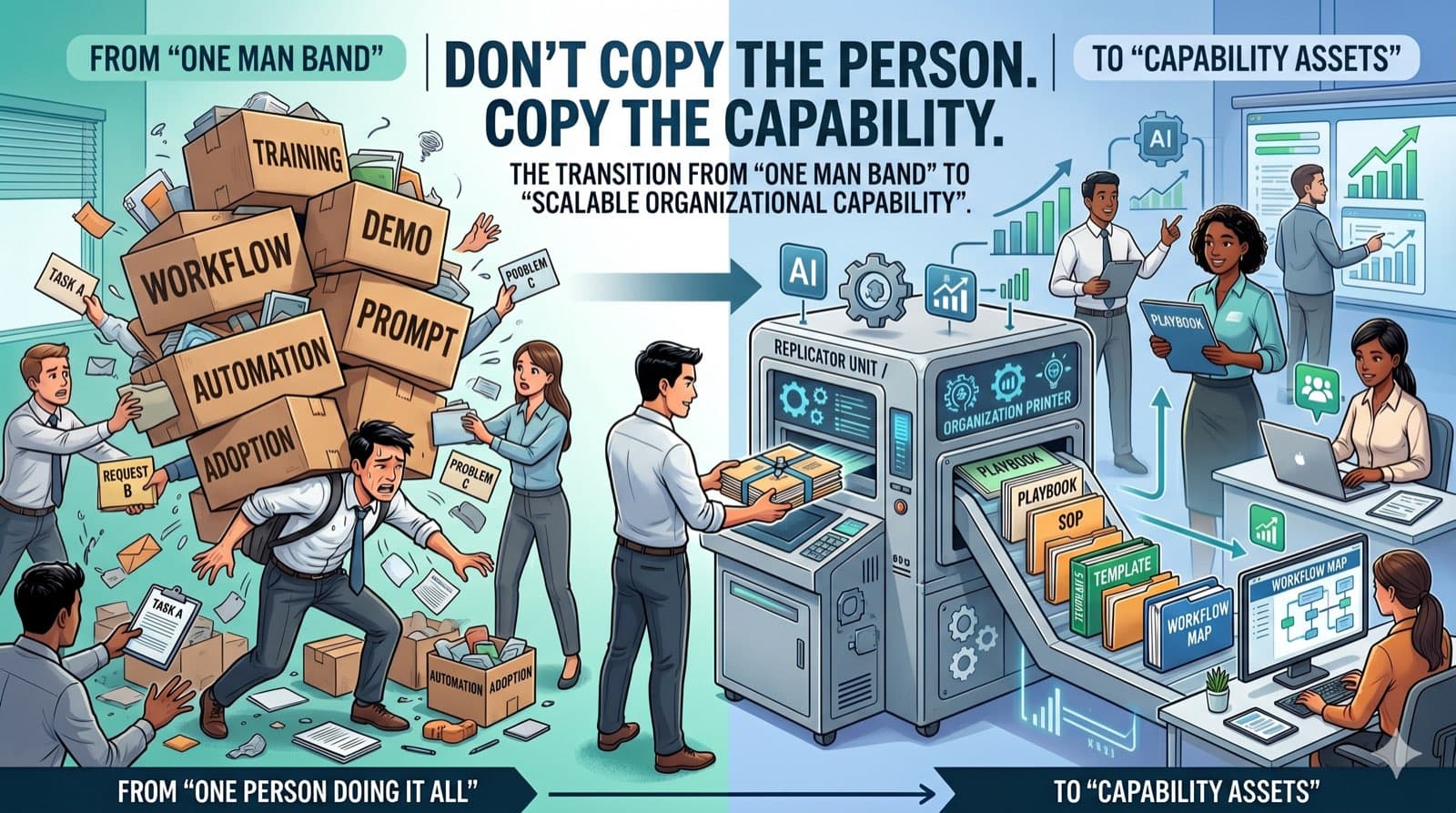
Many companies do not lack AI super individuals. They burn them out. Once they identify a few AI-savvy employees, they send them everywhere: training others, writing proposals, building demos, and giving presentations. It may look effective in the short term. But after a few months, three problems often appear: - These super individuals become exhausted. - Their capabilities are not truly replicated. - AI transformation becomes a case of "the more proactive you are, the more extra work you get." The problem is not the people. The problem is how the organization uses them. Many companies treat super individuals as "firefighters," not "transformation designers."
Redrawing the Workflow
AI transformation should not start by redrawing the org chart. It should start by redrawing the workflow: - Where do customers come from? - How are needs identified? - How are solutions generated? - Which steps can be AI-augmented? - Which decisions must remain human-led?
Four Changes Organizations Must Make
To build a super organization with super individuals, companies need to change four things: ① Give them formal recognition, not just rely on passion If AI exploration is only something people do after work, it will not last. Organizations need to give these individuals clear roles, authority, and performance recognition. Otherwise, transformation remains a personal interest, not an organizational mechanism. ② Let them lead small teams, not fight alone The most effective structure is not one AI expert serving the whole company. It is a small team built around a real workflow: Business owner: defines the real problem. Super individual: redesigns the workflow. Technical partner: supports system integration and automation. Frontline users: provide real feedback. The goal of this team is not to build a demo. It is to transform a real workflow.
For example, if someone in sales uses AI to connect customer research, email generation, CRM updates, and follow-up reminders, the organization should not simply ask this person to teach others "how to write prompts."
It should let this person lead a small team and turn that workflow into a standard sales practice.
③ Turn success into three layers of assets, not just a publicity story A successful AI practice should not stop at "we built a case." It should become: Case: What business value was validated? Playbook: How can others replicate it? Where are the pitfalls? Tools or templates: How can ordinary employees use it? Without these three layers, AI transformation remains individual experience. With them, individual capability becomes organizational capability.
④ Redefine what "high-value contribution" means In the AI era, companies should not only look at individual output. They should look at leveraged output. Did this person improve team efficiency? Create reusable assets? Make cross-functional collaboration smoother?Turn an inefficient workflow into an efficient one? High performance and high-leverage performance are not the same thing.
From Roles to Workflows
Traditional organizations are divided by roles: product, engineering, operations, sales. AI-era organizations should rethink capability around workflows. Super individuals are the people who make workflows fundamentally better. The organization's job is not to consume them. It is to identify them, empower them, and systematically replicate their capabilities.
Where is your organization stuck today? Identifying them? Empowering them? Or replicating them?
Takeaways
The problem is not the people. The problem is how the organization uses them. Many companies treat super individuals as "firefighters," not "transformation designers."
Without these three layers, AI transformation remains individual experience. With them, individual capability becomes organizational capability.
Traditional organizations are divided by roles: product, engineering, operations, sales. AI-era organizations should rethink capability around workflows.
Was this useful?