AI Workforce Transformation Lead
One role at a time. Understand what it is, who it fits, and how to enter
"AI won't replace humans — it will augment them." You've heard this. It's not wrong. But it's not the full picture. The WEF Future of Jobs Report 2025 projects that by 2030, AI will create ~170M new roles while displacing ~92M — a net gain of 78M jobs. But for specific industries, specific roles, and specific people, the disruption is real: tasks get reassigned, headcount shrinks, skill requirements shift overnight. That's what an AI Workforce Transformation Lead is built to address.
What this role actually does: Assess AI's impact on roles, capabilities, and org structure — then drive job redesign, reskilling, communication, and risk management. This isn't yet a standardized job title. It's a cluster of responsibilities splitting off from HRBP, OD, L&D, change management, and business operations.
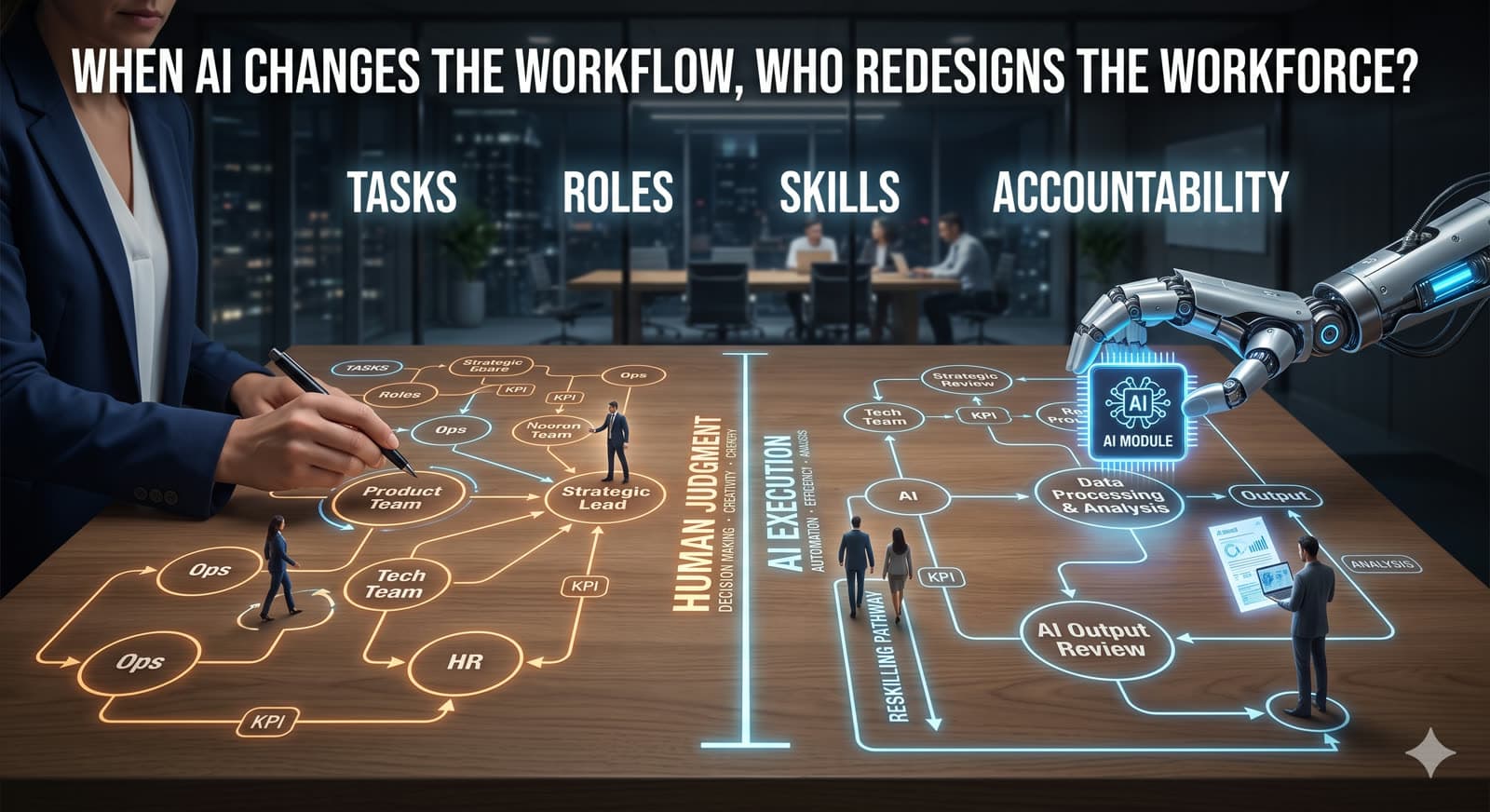
Why existing roles aren't enough: Traditional change management handles adoption. HRBP handles talent. But AI restructures the work itself: - Which tasks get automated? - Which decisions must stay with humans? - Which roles shrink — and which just shift? - When efficiency gains come from headcount cuts, how does the org handle fairness and trust?
The answers also look very different in regulated industries. In finance, healthcare, or insurance, handing credit decisions, claims reviews, or compliance checks to AI isn't just an efficiency question — it's a legal and accountability question.
Four core responsibilities: → Role impact assessment — decompose tasks, not just job titles → Job & capability redesign — map which skills gain value, which lose it → Transition pathways — reskilling, internal mobility, pilots, performance resets → Org risk management — employee trust, severance, accountability, compliance
Who should consider this path: HRBPs, OD and L&D practitioners, change management consultants, business ops leaders. But it requires more than people skills — you need to understand AI capabilities, process logic, and data. The most credible people in this role can honestly answer three questions: → What work will AI eliminate? → What work will become more critical? → How will the org take responsibility for those affected? Human value in the AI era won't be redefined automatically. It needs to be deliberately designed — and honestly faced.
Takeaways
Traditional change management handles adoption. HRBP handles talent. But AI restructures the work itself: - Which tasks get automated? - Which decisions must stay with humans? - Which roles shrink — and which just shift? - When efficiency gains come from headcount cuts, how does the org handle fairness and trust?
Human value in the AI era won't be redefined automatically. It needs to be deliberately designed — and honestly faced.
Was this useful?