AI Governance Manager
One role at a time. Understand what it is, who it fits, and how to enter.
AI's Expanding Role Raises New Questions
AI can do something. That doesn't mean it should be allowed to.
Most companies start with AI for efficiency: faster support replies, faster reports, faster code. But once AI moves into hiring, credit scoring, claims, finance, medical advice, content moderation, the questions change. Is it safe? Compliant? Fair? Explainable? Who's accountable when it fails? That's the job of an AI Governance Manager: building the governance system that keeps AI's innovation, efficiency, risk and accountability in balance.
Convergence of Disciplines
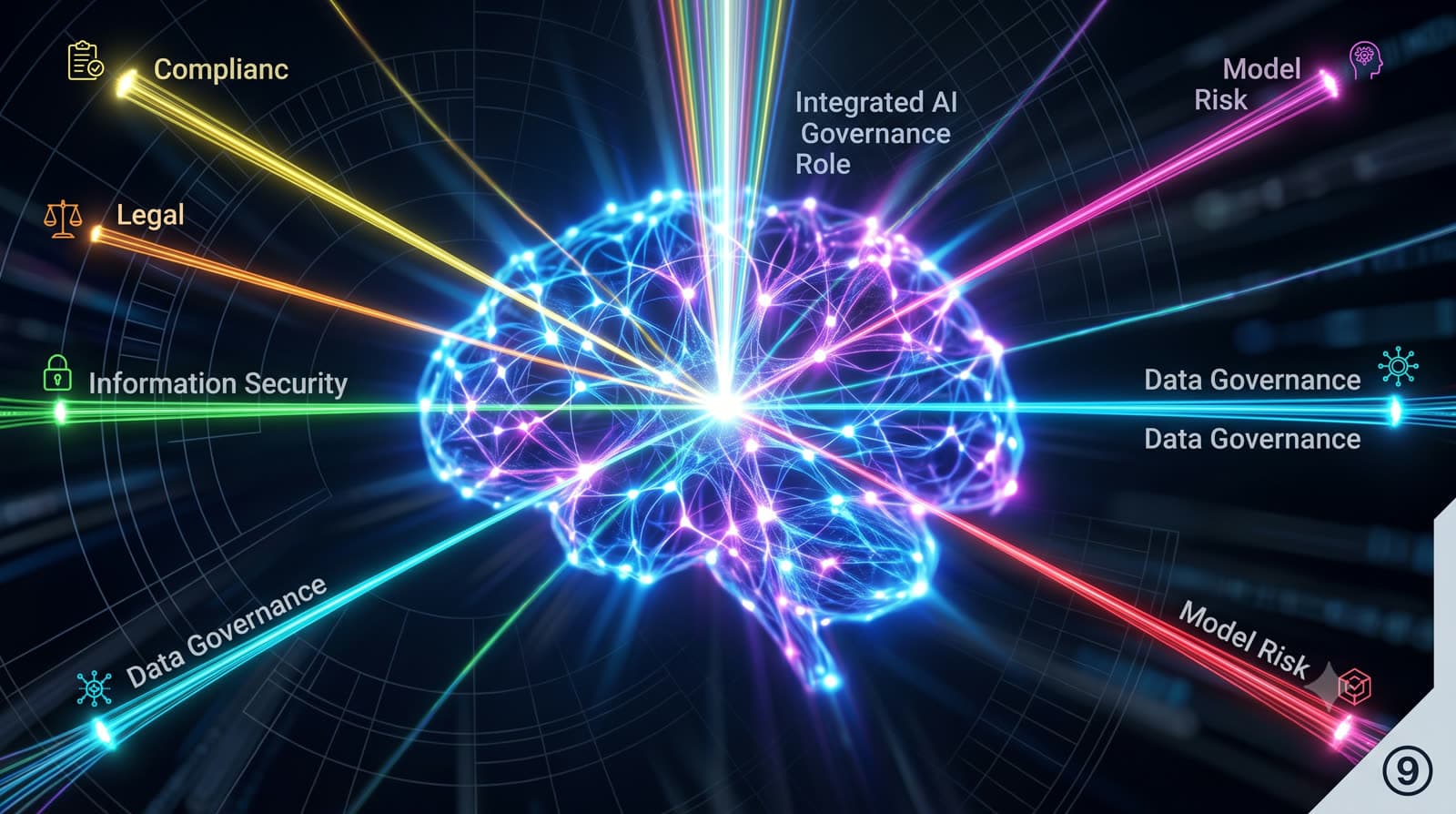
This isn't a linear upgrade from one role. It's a convergence: compliance knows the rules, legal knows liability, infosec knows system risk, data governance knows data flow, product knows the use case, model risk knows evaluation. The AI Governance Manager connects these lenses into something a business can actually run on.
Beyond Data Governance
Why isn't data governance enough? Data governance asks where data comes from and who can use it. AI governance asks more: why did the model decide this, can it be explained, who's affected if it drifts, how far can an autonomous agent act on its own.
A Fast-Moving Regulatory Landscape
The field is becoming real, fast. The EU AI Act's high-risk rules were just delayed in a May 2026 political agreement, proof that governance is an ongoing capability, not a one-time checkbox. NIST's AI RMF, ISO/IEC 42001, and China's generative AI rules point the same direction. IAPP reports 77% of organizations are already building AI governance programs, near 90% among AI users. Draup found governance and model-risk hiring up 81% year-over-year. This is a real gap companies are scrambling to fill.
Guardrails Vary by Use Case
In practice: brainstorming and copy edits need light guardrails; customer-facing use needs human review; hiring, credit and medical decisions need strict evaluation, audit trails and clear accountability.
Strong candidates come from compliance, legal, infosec, data governance, privacy, model risk, or AI product, but background is just the entry ticket. What matters is turning scattered risk concerns into standards a business can actually act on.
Governance Enables Responsible Innovation
Governance isn't the opposite of innovation. The closer AI gets to core decisions, the more it needs governance. The value isn't using less AI. It's letting companies use AI responsibly where it matters most.
Takeaways
AI Governance Manager: building the governance system that keeps AI's innovation, efficiency, risk and accountability in balance.
AI governance asks more: why did the model decide this, can it be explained, who's affected if it drifts, how far can an autonomous agent act on its own.
Governance isn't the opposite of innovation.
Was this useful?