AI Artist Engineer
One role at a time. Understand what it is, who it fits, and how to enter
Generative AI has made it possible for anyone to create images and videos — but the real challenge in commercial content has never been generation. It's control: consistent style, accurate branding, and output that a team can reliably reproduce. That's the problem AI Artist Engineers are built to solve.
Defining the Role
One-line definition: Someone who combines artistic judgment with AI engineering capabilities, using generative AI tools and automated workflows to produce visual or video content that consistently meets brand, context, and business objectives.
The key word isn't Artist — it's Artist Engineer. Artist means aesthetic sensibility, style, and creative judgment. Engineer means process, control, and reproducibility. You don't need to train models from scratch, but you do need to build reusable generation pipelines and maintain control over characters, composition, style, and output quality.
Beyond Single-Image Generation
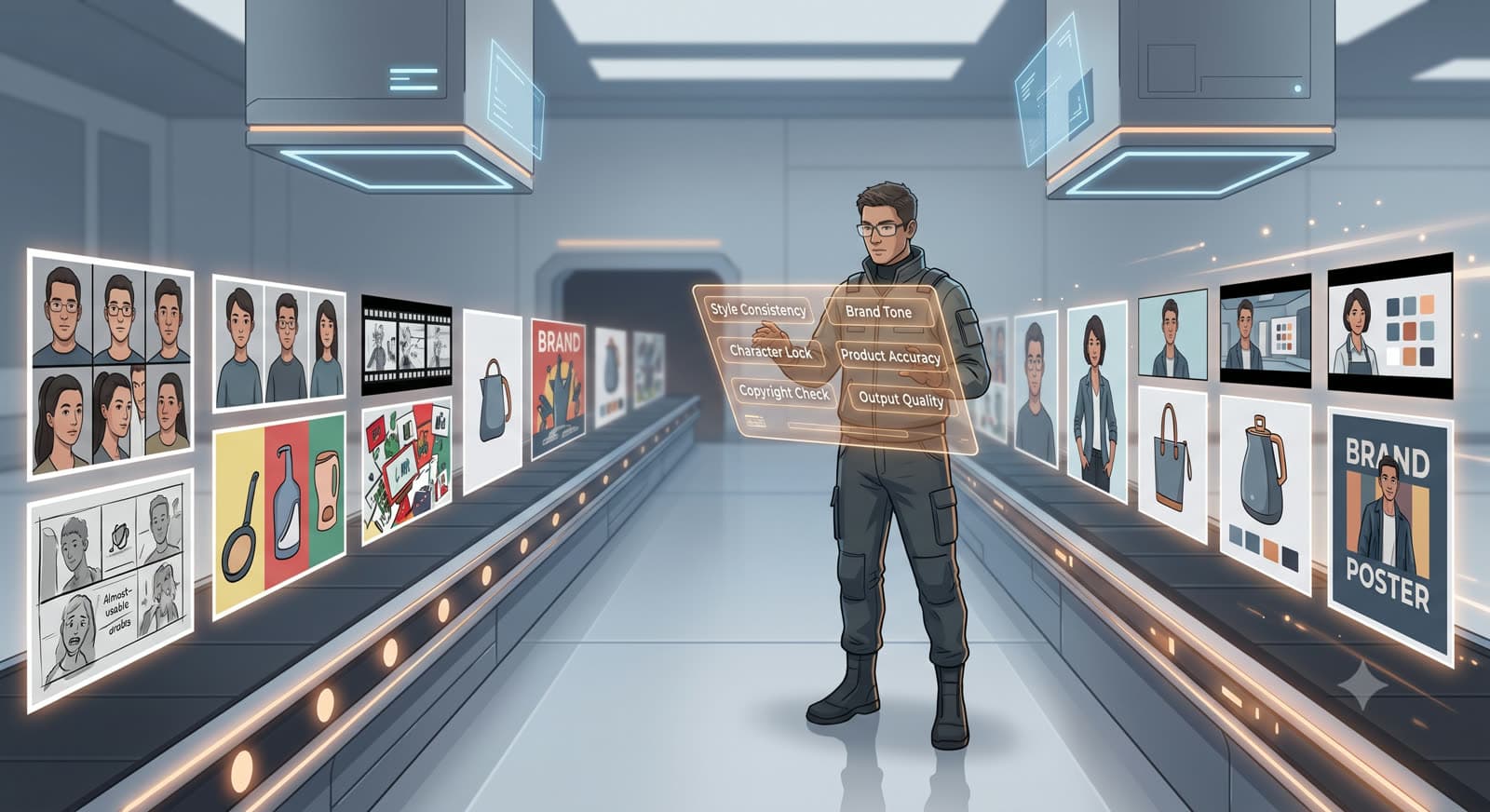
How it differs from an AIGC Designer: The goal isn't to produce one great-looking image — it's to design a controllable creative production system. Can 20 ad images for the same brand maintain a unified visual style? Can the same character stay consistent across different scenes and lighting? Can another team member reproduce the same results? These problems can't be solved with a single Prompt. They require process, parameters, reference images, model configuration, and node-based workflows.
Three Levels of Engineering Capability
Engineering capability comes in three levels: - Level one — proficiency with leading AI tools, with stable Prompt templates and output workflows in place. - Level two — building reusable pipelines in ComfyUI or similar node-based tools, with a working understanding of ControlNet, LoRA, and batch generation. - Level three — connecting generation pipelines to team asset libraries or marketing systems via API or scripting. Not every role requires Level three. But if you're still at "write Prompts, generate images," you're closer to an AIGC Designer than an AI Artist Engineer.
Who Is a Good Fit
Who's a good fit: Visual designers, illustrators, animators, game artists, and concept designers for film and TV. Those with a strong aesthetic foundation who are willing to build technical workflow skills have the most natural path into this role. The people who stand out will combine three things: aesthetic judgment, commercial understanding, and technical process capability.
What Still Requires a Human
AI can generate a lot. But deciding whether to use it, recognizing what's wrong, and knowing how to make it better — that still requires a human.
Takeaways
The goal isn't to produce one great-looking image — it's to design a controllable creative production system
If you're still at "write Prompts, generate images," you're closer to an AIGC Designer than an AI Artist Engineer.
Deciding whether to use it, recognizing what's wrong, and knowing how to make it better — that still requires a human.
Was this useful?